Understory
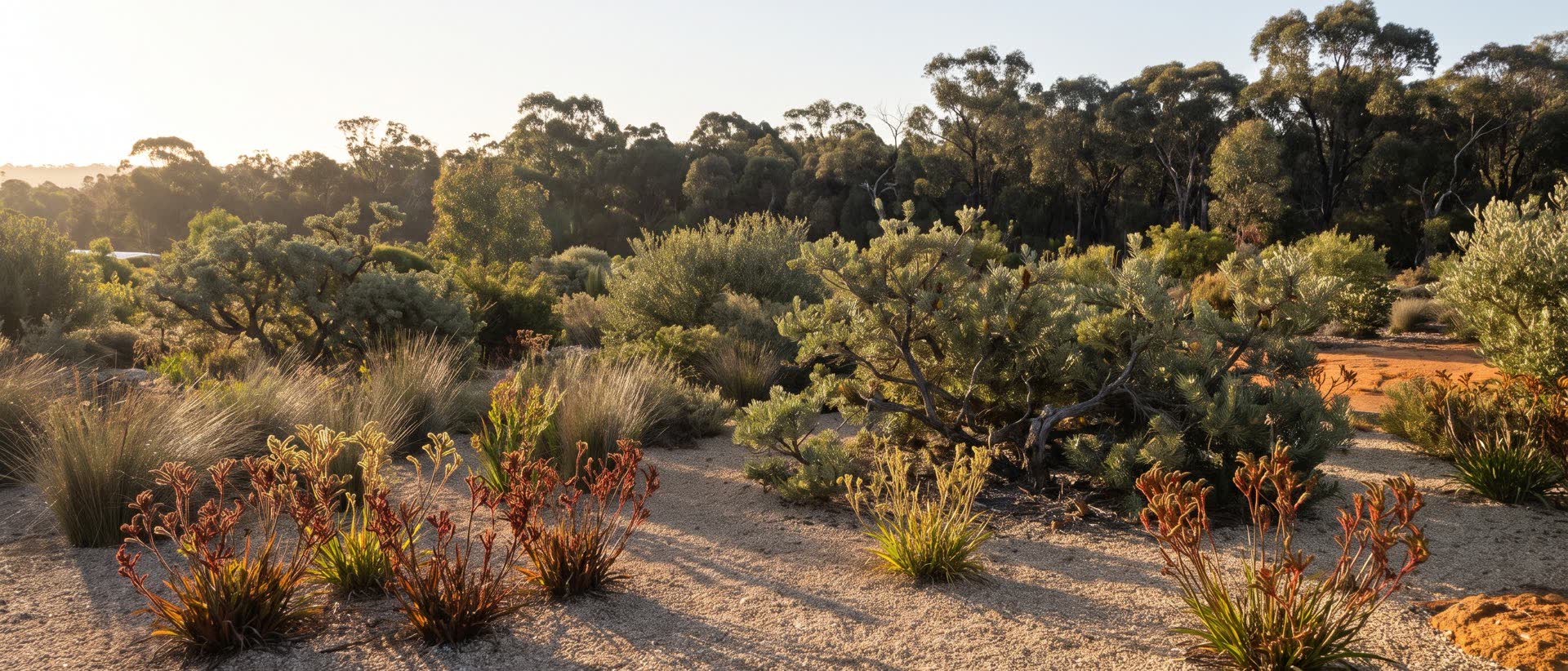
We design waterwise native gardens across the Perth Hills and the eastern suburbs. Design only, or design and build through partner contractors.
Design
Site visit and concept, $480
Two hours on site with both of us. We walk the block, dig a few test holes, and talk about how you use the place. Concept plan and plant direction within three weeks.
Documentation
Full documentation from $2,800
Planting plan, setout, levels, soil preparation and a staged budget. Concept to documentation in six weeks. The drawings are built for use on site by a contractor.
Build partnership
Handover in 10 to 16 weeks
Builds run with two contractors we trust, one in Mundaring, one in Midvale. We stay on the job through setout and planting, and come back through establishment.
Case study
Glen Forrest, 2025
- Block
- 2,140 m² on laterite gravel, falling 3 m corner to corner
- Scope
- Full documentation, build with partner contractor
- Documented
- Late March to early May 2024, six weeks
- Planted
- June 2024, 1,106 plants
- Handover
- 14 weeks from setout
- Watering
- Establishment only, off by autumn 2026
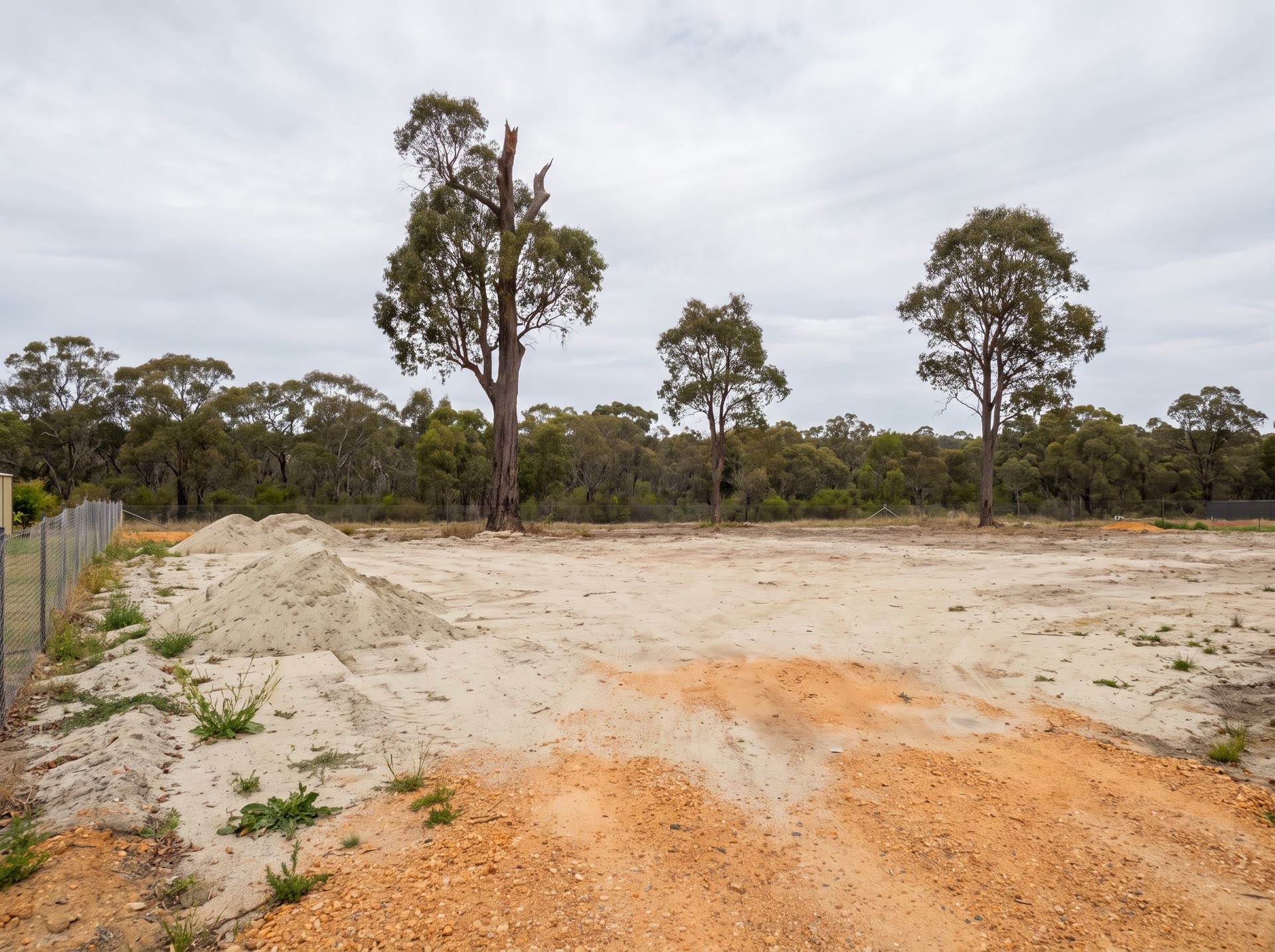
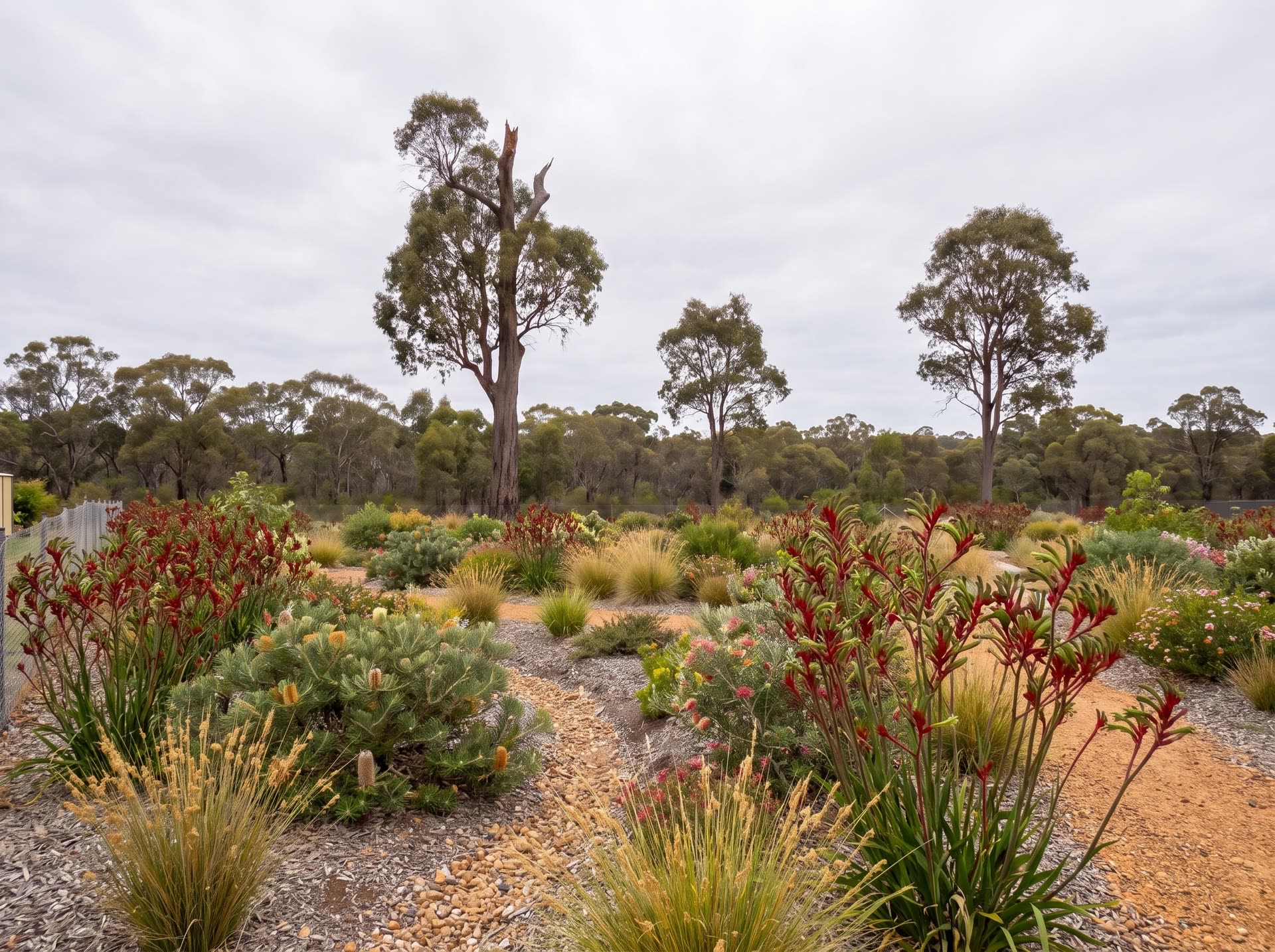
The same viewpoint, October 2023 and December 2025, eighteen months after planting. The three jarrah on the back boundary hold the skyline in both.
The brief
New build on an old orchard block, north end of Glen Forrest.
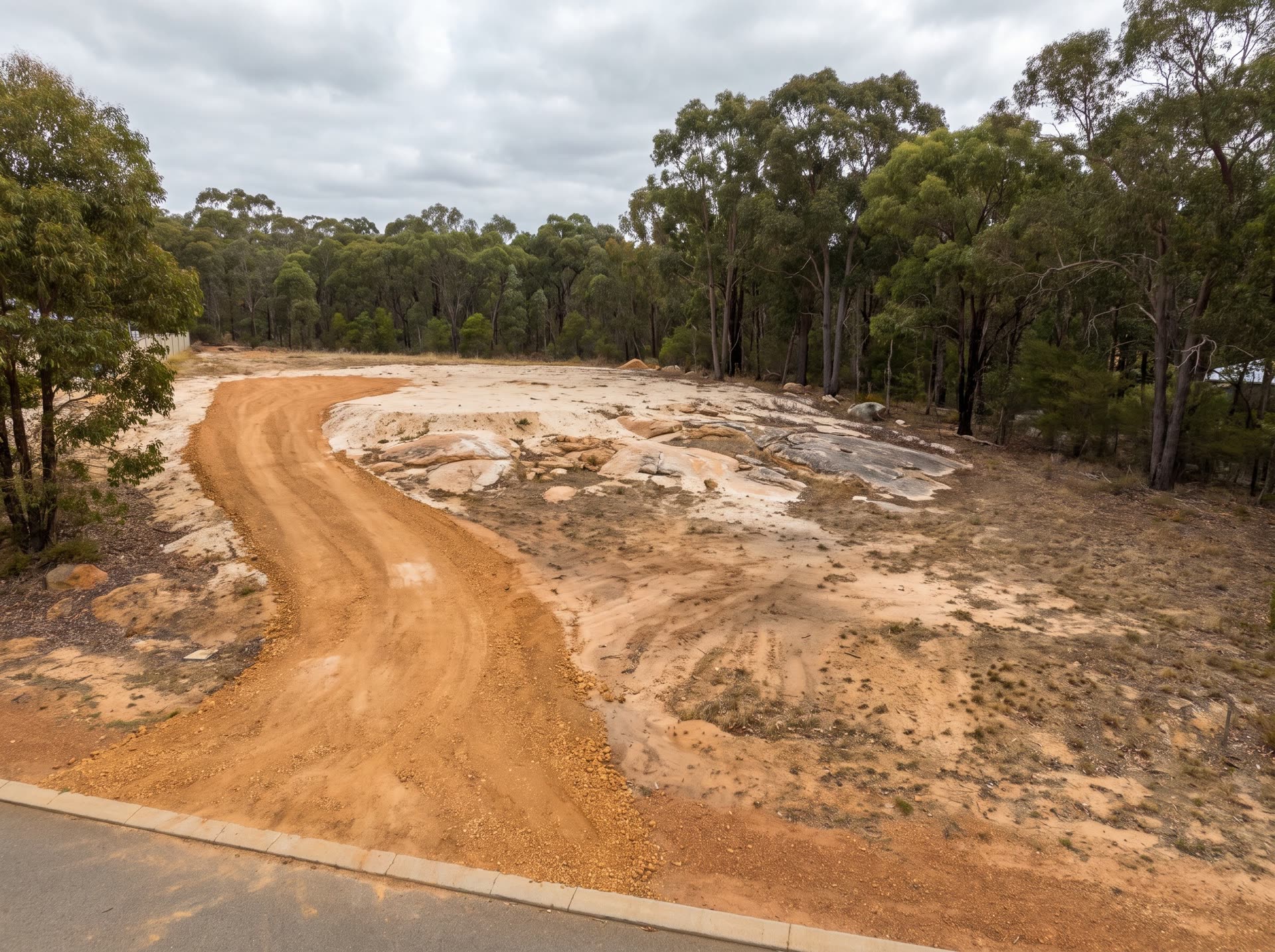
The clients came to us with a finished house and a stripped block: a cut around the pad, a spread of builder's sand, and laterite gravel under all of it. They wanted the garden to read as part of the jarrah country behind the back fence, and they did not want to own a reticulation controller.
That second request set the design. Everything on the plan had to establish on two summers of hand watering and then live on rain. Which in the Hills means the garden gets decided in winter, by where the water goes, long before anything flowers.
Constraints
Slope, caprock, and a bushfire rating that rules out mulch near the house.
The block falls three metres corner to corner and sheds its winter water straight at the house pad. Laterite caprock sits about 400 millimetres down on the high side, so anything needing deep root run went low on the block, where the profile opens up. Laterite clay takes different roots than Bassendean sand. We design for the soil you have.
The bushfire rating asked for gravel rather than mulch for the first three metres off the wall, and low fuel planting beyond that. So the ground layer near the house is stone, Conostylis and Hemiandra, nothing that carries a flame, and the shrub mass starts past the apron.
The retained trees were the easy call. Seven jarrah and two marri stayed, and the levels were designed around their root zones rather than the other way about.
Gravel soaks and swales first. The planting only works if the water does.
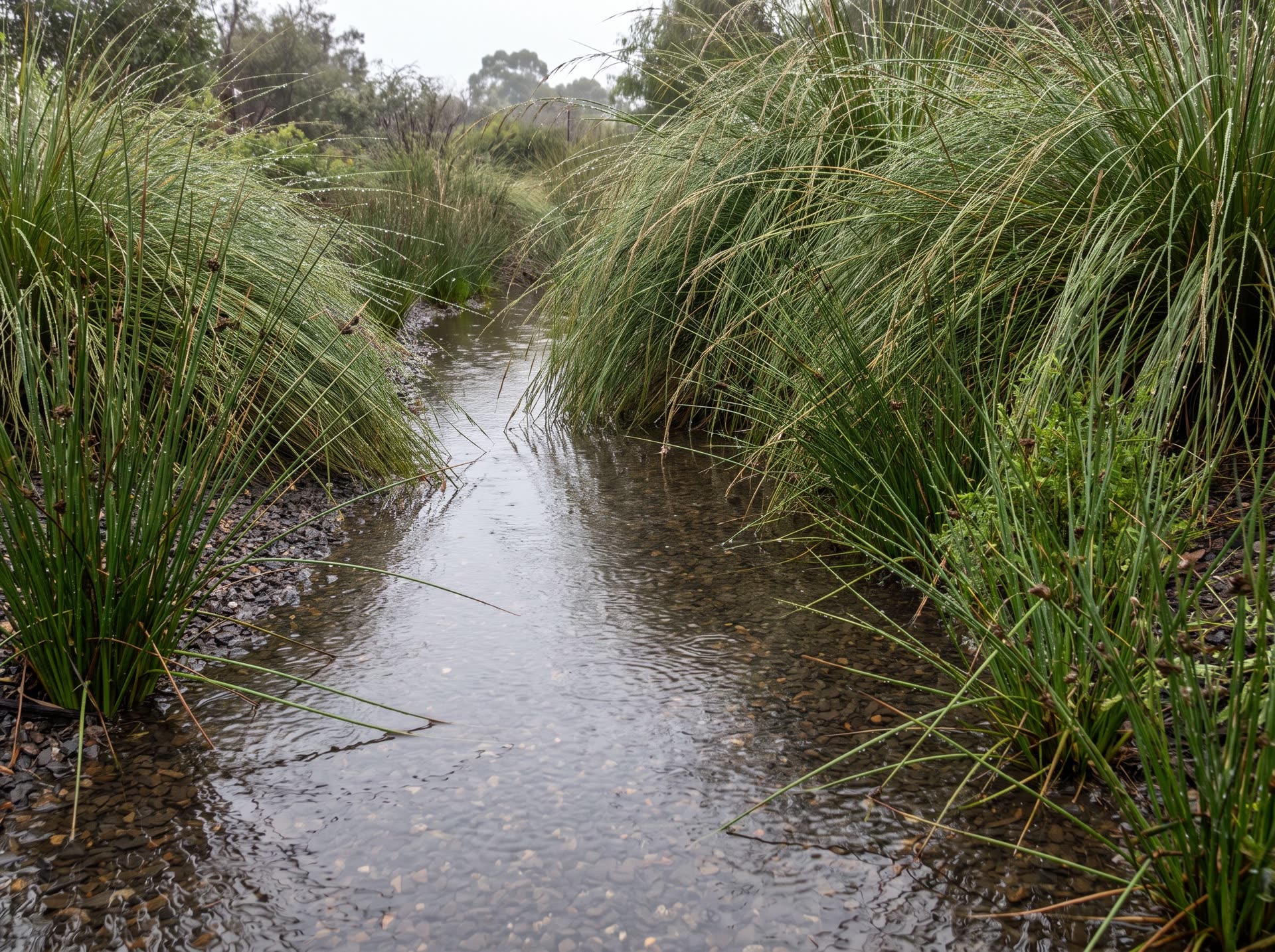
Roof water runs to two gravel soaks under the east side, call it 150 kilolitres in a normal Mundaring winter. The driveway sheds to a swale that crosses the front of the block and drops into the banksia bed. Overflow goes to the verge, though it hasn't been needed so far.
The swale is the garden's plumbing. It reads as a dry gravel creek from the street, and for about forty days a year it runs. Ficinia and Patersonia hold the edges, and the Themeda has closed over the top of the bank so you now read the water as a gap in the grass.
There is no irrigation controller on the property. Establishment watering is a hose point, a tank cart for the far corner, and a wetting agent check each spring. After autumn 2026 the garden is on its own.
Planting schedule, Glen Forrest
rev C, May 2024. 24 species, 1,106 plants. Jarrah and marri retained.
Structure and screens
Xanthorrhoea preissiibalga, 6
Allocasuarina fraserianawestern sheoak, 12
Melaleuca vimineamohan, 18
Hakea laurinapincushion hakea, 9
Banksia grandisbull banksia, 5
Banksia sessilisparrot bush, 22
Calothamnus quadrifidusone-sided bottlebrush, 26
Grevillea wilsoniiWilson's grevillea, 31
Understorey
Anigozanthos flavidustall kangaroo paw, 96
Conostylis setosawhite cottonheads, 72
Dampiera lineariscommon dampiera, 90
Hibbertia hypericoidesyellow buttercups, 85
Lechenaultia bilobablue lechenaultia, 60
Hemiandra pungenssnakebush, 38
Kennedia prostratarunning postman, 45
Hypocalymma angustifoliumwhite myrtle, 44
Orthrosanthus laxusmorning iris, 54
Patersonia occidentalispurple flag, 66
Grasses and rushes
Themeda triandrakangaroo grass, 120
Austrostipa elegantissimafeather speargrass, 48
Neurachne alopecuroideafoxtail mulga grass, 60
Ficinia nodosaknotted club rush, 45
Juncus palliduspale rush, 30
Meeboldina scariosavelvet rush, 24
Three seasons in
Winter 2024, planting
Everything went in small. Tubestock throughout, except the balga, which came in as advanced stock with the nursery's blessing and a crane strap. Small plants root into laterite; larger stock is slower to settle in and often struggles. By September you could not tell which beds went in first.
Summer 2025, first test
The first summer took six percent of the planting, mostly Hibbertia on the north cut where the sand is shallowest over rock. We watered weekly through February, replaced losses in May, and adjusted the palette rather than the watering. The pattern of losses showed us where the soil profile changed.
Autumn 2026, letting go
Two summers in, the Themeda has closed over the swale bank and the Grevillea wilsonii has pushed into the gravel apron. Watering is down to a fortnightly check of the young banksia and ends this autumn. After that we visit each March.
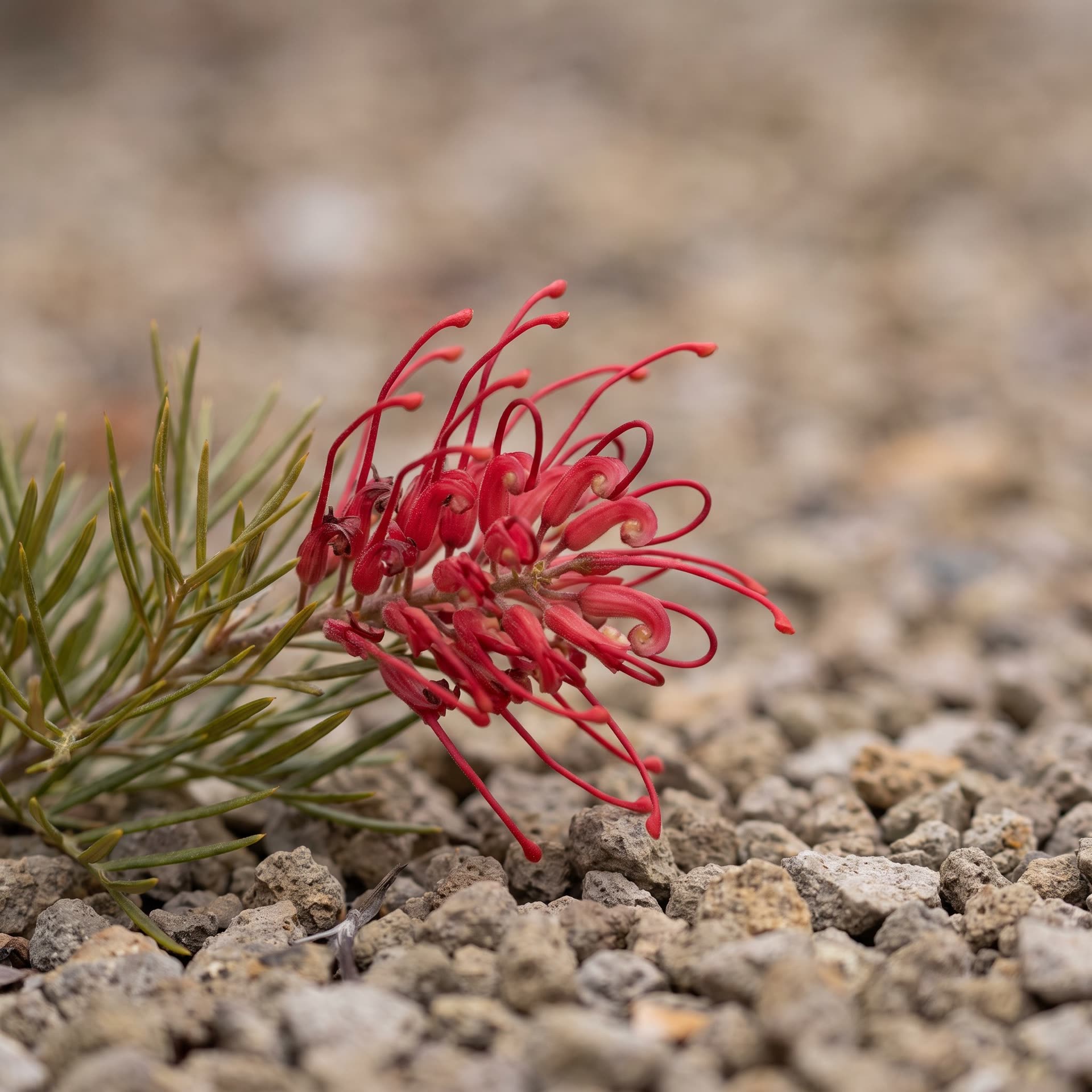
Four steps
Site walk and concept
$480, three weeks
Two hours on site. We dig test holes, map where the winter water goes, and note what grows well in the neighbouring gardens. Concept plan and plant direction follow within three weeks.
Documentation
Six weeks
Planting plan, setout, levels, soil preparation and staging. Issued for pricing to both partner contractors, or to yours if you have one.
Build
10 to 16 weeks
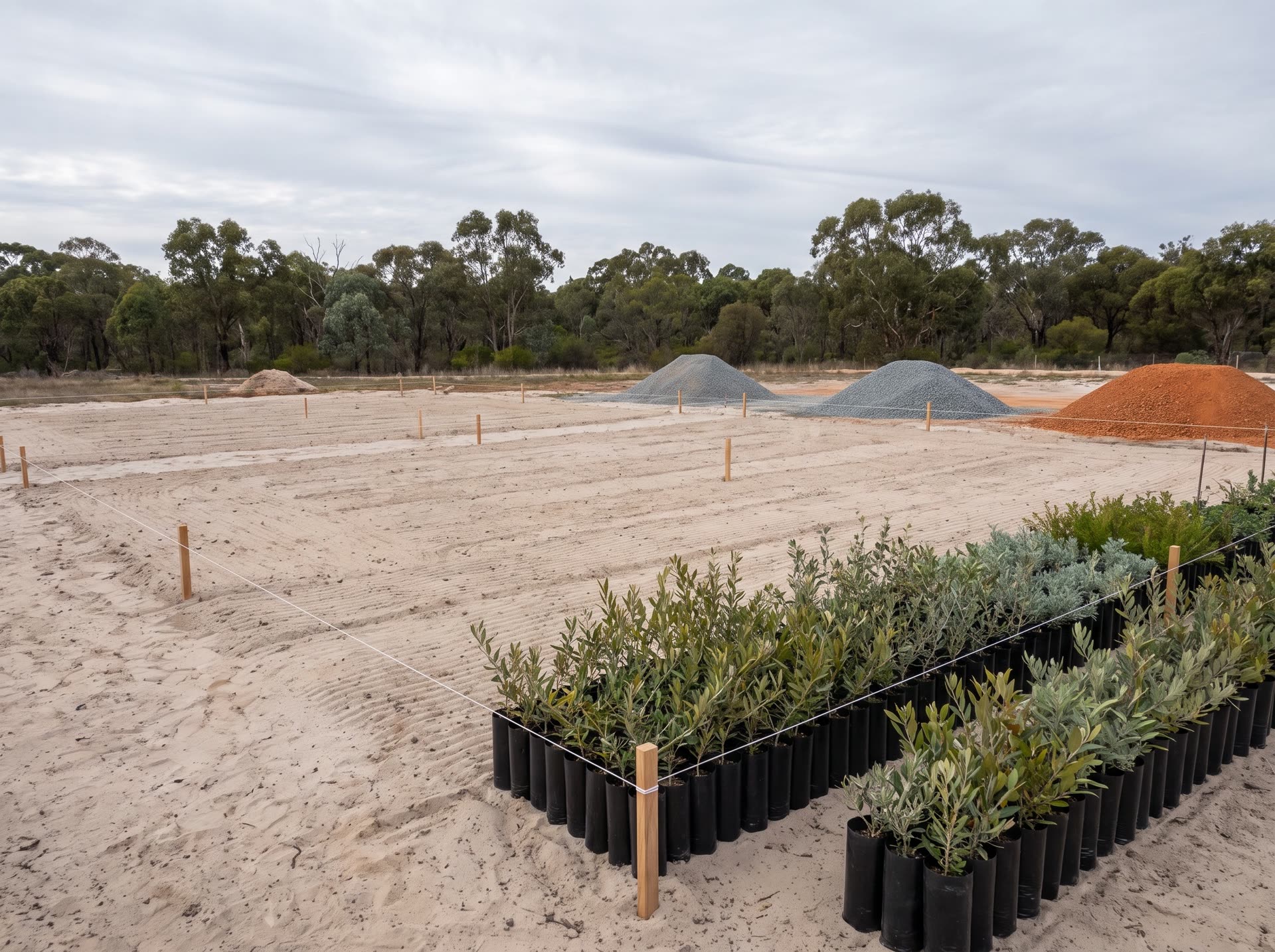
The contractor runs the job. We are on site for setout, for the soaks going in, and for every planting day. Earthworks first, water second, plants last.
Establishment
Two summers
Watering tapers from weekly to nothing. We come back at six weeks, then each March, and replace what the summer takes. After the second autumn, maintenance is yours.
Contact
Start with a site visit.
Site visit and concept, priced as the first step under Process. We come to you, walk the block for a couple of hours, and follow up with a concept plan and plant direction within three weeks. If the garden goes ahead, that work rolls into the documentation. Email is best; we are usually on site.
hello@understory.exampleService area
Mundaring, Glen Forrest, Darlington, Mahogany Creek, Parkerville, Stoneville, Sawyers Valley, Hovea, Helena Valley, Kalamunda, Gooseberry Hill, Lesmurdie, Bellevue, Midland, Guildford and Bassendean.
Understory is Sarah Kettle and Tom Brandis. One of us is on every site visit, usually both.